Sunday, March 16, 2014

Garfield Survey: Final Results!


Here's a reminder of the results I received when giving the Garfield Reading Attitude Survey at the beginning of the research study: 
Garfield Reading Attitude Survey Results Prior to Research

·        Full Scale Score (N=21): 78 66 56 63 69 70 68 56 74 42 62 65 45 67 73 70 61 62 57 61 62
·         Mean: 63.2 Range (42-78)
·         Median: 63
·         Mode: 62


Participants Full Scale scores (Recreational +Academic) generally ranged from 53-74. Nine students scored in the range of 53-63 and nine students scored in the range of 64-74. All students completed this survey in the classroom. Each question was read twice to the students while the students circled the Garfield character that corresponded with their feelings. 

                              
Now that my research study is over, I gave the students the Garfield Reading Attitude Survey again to see whether reading attitudes have changed.  Here's a look at the results: 

 
Garfield Reading Attitude Survey Ending Results: 

Full Scale Score (N=21): 64, 64, 79, 45, 62, 62, 65, 75, 63, 65, 61, 51, 47, 64, 80, 54, 71, 45, 
60, 59, 71

Mean: 62.2 Range (45-80)
Median: 62.5
Mode: 64


Participants Full Scale scores (Recreational +Academic) generally ranged from 53-74. Seven students scored in the range of 53-63 and seven students scored in the range of 64-74. All students completed this survey at the same time in the classroom. Each question was read twice to the students while students circled the Garfield character that corresponded with their feelings. The survey was given in the exact same manner that it was given the first time the students completed the survey.

 
Comparing results: One thing that I notice is that when given the attitude survey again, I have more students on the extreme ends of the results. I had four students that scored with really low reading attitudes, where before I only had two students. I had three students that scored really high on the reading attitude survey, where as before I only had one. Therefore, although I had more students score low, I also had more students score extremely high this time. What I also find interesting is that the middle ranges stayed even again. When looking at the ranges of 53-63 and 64-74, I had seven students fall in each range. Before, I had nine students score in each range. The only thing that changed from the previous survey results was two students scored lower in the 42-52 range and two students scored higher in the 75 and above range.

 
Reasons: I can't help but think of reasons of why two students scored lower this time and two scored higher. The reason for the lower scores could be due to inconsistency in school days. We have had an abundance of snow days recently and this could have an impact on students' attitudes. Students are just now getting back on routine. In fact, last week was our first full week with no delays since Thanksgiving. This does have an impact on the attitudes of first grade students. Reading attitudes could have increased due to students increased abilities to read. When students feel they are capable of reading, they are more likely to enjoy it. From my experiences, I have found that struggling readers are more likely to have a negative reading attitude. I saw lots of improvement within fluency scores and WCPM while working with students. Therefore, the increased reading abilities could have increased reading attitudes.


Thursday, March 13, 2014

Data, Data, Data!

I was able to sit down with the three students that had missed their small group sessions last week in order to gather the final scores. I have now officially completed my small group HELPS, repeated reading and Houghton Mifflin sessions. Here are the final results of the HELPS and repeated reading groups R-CBM fluency scores.

Final Repeated Reading Group:

Final HELPS Group:

STAR Test: I was able to have all but three students take the STAR Test today. I will post the results very soon, comparing the STAR Test results from the beginning of the research to the end of the research. I looked at the scores from the students who took the test today and it looks like the results are going to be very interesting!

1st Whole Group R-CBM compared to 2nd Whole Group R-CBM (Given to all students every 2 weeks after research began):

The table above shows the first reading on 2/14 and the second progress check on 3/7. The students that are in yellow are my RTI students. The students only read the passage one time. The table shows the results after the first reading. All but one student showed gains.  See the table below for gains and losses. 
I was shocked to see such positive results! I only had one student that read fewer words than last time and that was only by four fewer words. The smallest gain was 3 WCPM and the largest gain was 59 WCPM. As you can see, most students made significant gains. I am very happy to say that during Reading RTI (Response to Intervention) meetings tomorrow, I get to dismiss two students completely from RTI due to such positive R-CBM results during the research process.

Garfield Survey: I gave the students the Garfield Survey today since I am now finished working with small groups. All students were present and took the attitude survey. I will be looking to see how reading attitudes changed from the beginning of the research process to the end. I am currently scoring their surveys and will post results soon. 

Data I have left to collect in the classroom: 
  • Three students need to take the STAR Test
  • Final whole class R-CBM  (Same passage will be used that was given right before the research began in order to look at progress made) 

Tuesday, March 11, 2014

Winding Things Down

Things have been rather quiet in the research world this week. It is a sure sign that things are slowly coming to an end. Last week I was able to finish up with my small groups. I am still missing three R-CBM scores from students that were absent last week and I plan to make up those sessions tomorrow. Sicknesses have been sweeping through my classroom and it puts a damper on collecting data. Last Thursday and Friday I had three students out each day. I will post finalized scores as soon as I get the last three entered. You may be wondering what I am planning to do with all of the R-CBM scores I have collected. I was able to take a look at the data myself to look at gains and loses within each student after each session. In order to take a better look at which program was more effective in helping students with fluency, my professor will be helping me run statistical data on the numbers. Running statistics goes beyond my knowledge so I am very grateful that she will be helping me with this part of the process.
Below is what I have left to complete before March 20th. I plan to complete these assessments ASAP and will inform you of the results.
  • 2nd Whole Class R-CBM Benchmark to track whole class progress 
  • STAR TEST- Given after last group session has been completed 
  • Garfield Survey- Given after last group session has been completed 
  • Final whole class AIMSweb passage after last group session has been completed

Now that I am finished working with small groups, I will be able to really look into reading attitudes after the Garfield Survey is taken again. This will inform me of whether or not the fluency programs had an impact on reading attitudes. If the Garfield Survey results stay about the same for the students, then I will know that the research groups did not impact their thoughts on reading. The STAR Test will also allow me to see the gains made from the beginning of the research to the end. If significant gains are made in students' reading levels, this would show effectiveness of the research groups. I am excited to finish up to see the end results. I feel like large gains have been made with how many words the students can read per minute, but I am just as interested to see if reading attitudes were affected. This has been harder for me to observe from week to week.

Thursday, March 6, 2014

The Colorful World of Coding!


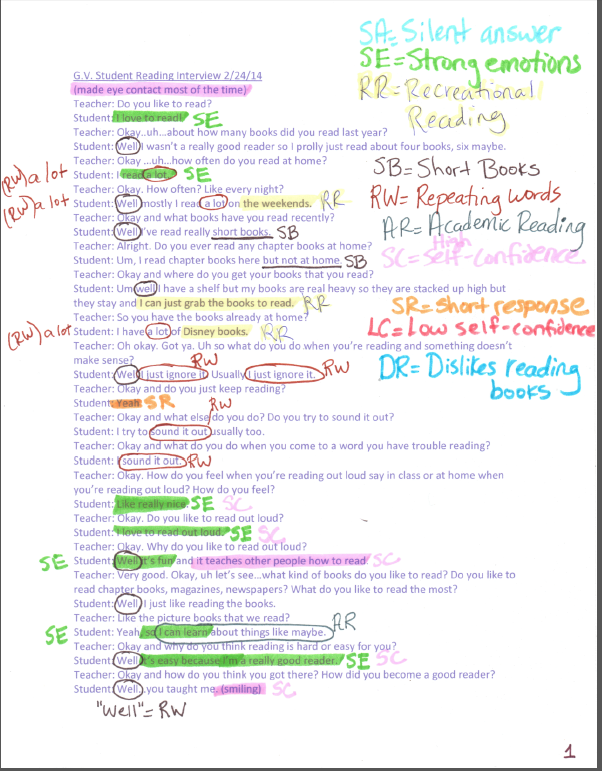
Table 1 Coding Mapping (To be read from top to bottom)
___________________________________________________________
                                                  Initial Codes
Estimating books read                                    Questioning answers            
Repeating words (a lot and well)                   Agreeing with responses                
Understanding                                                Enjoying reading               
Thinking                                                          Learning from reading                     
Bragging/ High Confidence                            Dislikes reading
Mumbling answers                                         Body language           
Complimenting students                                 Hiding behind clothes
Explaining reasons                                          Picture books
Connecting to real life                                    Emotions displayed
Broad answers                                                Interrupting
Speaking                                                         Honesty

___________________________________________________________
                                   Secondary Codes (Focused Codes)
Silent Answer (SA)                                      Short Books (RR)
Short Response (SA)                                    High Self-Confidence (SC)
Repeating Words (SA)                                  Low Self-Confidence (SC)
Academic Reading (RR)                               Strong Emotions (SE)
Recreational Reading (RR)                           Dislikes Reading Books (SE)
                                                           

___________________________________________________________
                                   Final Codes (Data Categories)
Self-Confidence (SC)                           Low Communication (SA)                    
Honest Opinion (SE)                            Reading Purpose (RR)


Rossman and Rallis (2003) stated, “Data analysis is a similar process of sorting, categorizing, grouping, and regrouping the data into piles or chunks that are meaningful” (p.271). This is the process that I used in order to develop themes that I was seeing throughout the transcribed reading attitude interviews that I completed with three of my students. Below are two of the themes described that emerged within the interviews.

Self-Confidence (SC)
I selected the term self-confidence to describe the way the students felt about their own reading abilities in the classroom. Elements that I coded in the reading interviews with self-confidence were statements with low self-confidence and high self-confidence. All three students that were interviewed displayed their honest opinion about their own self-confidence. Without using names, students mentioned the following statements:
High-Self Confidence:
(made eye contact most of the time)
“Well it’s fun and it teaches other people how to read”
“It’s easy because I’m a really good reader”
“I love to read out loud”
“easy”

Low-Self Confidence:
(little to no eye contact)
“How would you feel…shy”
“Because when I try to speak in front of people I don’t say it loud”
“How do you feel when you read out loud…sad”
“Because I don’t want nobody to hear me”


Low Communication (SA)
During student interviews, students expressed low communication. Low communication included silent answers, short responses, and repeated words. Body language was documented during the interview and coded as silent answers when the student didn’t speak but showed a response through body language. Short responses were noted when the student responded to a question with a one or two word response. Repeating words were noted when the student responded with the same words numerous times. Students responded with the following responses:
Silent answers:
(Nods head yes)
(Shrugs shoulders)
(Shakes head no)
(Deep in thought)
(Hands on face)
(Pulls jacket over face)


Short responses:
“Yeah”
“Fix it”
“3”
“Over there”
“Yes”
“Everywhere”

Repeated words:
“Well”
“A lot”
“I just ignore it”
“Sound it out”


Below you will find three examples of my coding work....


Monday, March 3, 2014

Early Literature Review information vs. What I am seeing


I wrote a literature review prior to beginning my action research in the classroom. I wanted to take some time and talk about my early literature review information about fluency. In doing this, I will be able to discuss whether or not my research efforts are running counter to it or supporting it.

In my literature review I talked about the three components of fluency: speed, accuracy, and proper expression. I talked about how I thought that proper expression was the last to come. I agree with this statement even more now that I have worked with students specifically on fluency each week. The students are picking up their speed and their accuracy is improving, but I am still not seeing the proper expression when they are reading. Only my highest readers are using expression and intonation (pitch) when they read. The National Reading Panel stated, “The fluent reader has learned how to recognize the printed words with ease and speed, and few cognitive resources are consumed in the process” (2000, p. 3-8). I see my students become more and more fluent readers as I work with them each week.

In my literature review, I talked about how I would be using a constructivist view of learning in my classroom with this research study. In a constructivist classroom, “The teacher functions more as a facilitator who coaches, mediates, prompts, and helps students develop and assess their understanding, and thereby their learning”(Ed Online, 2004). I do these things when working with my fluency session groups each week. I coach the students by informing them on what they should do when they come to a word they do not know. For the HELPS sessions, we discuss unknown words and I help them to understand the passage. I feel like my research efforts are supporting this view.

My prior research discussed how the HELPS Programs “integrate easy-to-use instructional strategies that are specifically designed to improve students’ reading fluency” (Begeny, 2009-2013). I have to complete statistical analysis on the data still but I did look at gains and losses from week to week in students’ WCPM for each group. I do agree that the HELPS has been easy-to-use instructional strategies. The students have picked up on the routine at this point and they already know what to expect at each session now. This has allowed me to cut back on time spent reading the instructions and allows us to spend more time on the actual passage. HELPS research does say that sessions can be completed in 10-12 minutes. I really don’t see how this is possible based on the experiences I have had with the program. I have needed a solid 15 minutes to work with the students in order to get everything completed. I guess this could be due to working with a small group instead of just one student. 

As for repeated reading itself, Therrien and Kubina (2006) stated, “repeated reading appears beneficial for students who read between a first and third-grade instructional level” (p.156). Based on what I seen thus far, this statement seems to be accurate. I have only used repeated reading with first graders but it does seem to be beneficial for students. Repeated reading can serve as both Tier 2 RTI intervention and possible Tier 3 intervention (Huang, Nelson & Nelson, 2008). I have been using repeated reading as a part of my Tier 2 student interventions in the classroom.

As I am still not sure whether repeated reading, HELPS, or just normal reading series instruction is more effective (I will know soon!), I can at least say that my literature review seems to be right on track with what I am seeing in my research study. I know that the methods I have been using have affected the students' reading fluency. I can see results without even looking at data. I am also anxious to see if reading attitudes were affected.

The Final Week Working With Groups

This week will be my final week working with the HELPS, repeated reading, and Houghton Mifflin group. We are out today due to snow but I am hoping that we will be back in school tomorrow. I will have worked with each group a total of 2 hrs and 45 minutes. This means that I would have worked with the repeated reading group and HELPS group a total of 11 times by the end of this week. I need to work with the Houghton Mifflin group 45 minutes this week. This is 15 extra minutes than normal in order to make up time lost due to snow. I will have worked with the Houghton Mifflin group a total of five times, or a total of 2 hrs and 45 minutes. I am going to post the most recent results that I have seen from these groups.
Repeated Reading Group Results: 
Above you can see the scores gathered for the repeated reading group. I tracked gains and decreases in words read correctly per minute from week to week. I was looking for trends in doing this. What I was able to find was very interesting. The first date that really stands out to me is 2/4/2014. All students had a significant decrease in scores during that session. The scores decreased from anywhere to 13 WCPM to 26 WCPM. This is huge! Another date that stands out to me is 2/20/14. All students had gains in WCPM during this session. I am wondering if this has to do with the ease of the passages. Even though all passages given to the students were the same reading level, some passages still seem to contain harder words than others. I thought this was very interesting to see.
HELPS Groups Results: 
I found some interesting results in this group as well when tracking gains and decreases in WCPM. On 2/10/2014, all students showed gains in their scores. On 2/12/2014, the following session, all students showed decreases in their scores. The same thing happened a couple weeks later. On  2/19/2014, all students showed gains in words read correctly per minute. The following session, 2/28/2014, all students showed losses except for one student that showed gains. What are your predictions on what is causing this trend? The HELPS passages go in a sequential order and slightly increase in difficulty level from one passage to the next.


I also wanted to summarize what I will have completed by the end of this week and what I have left when it comes to data collecting. Highlighted in yellow is the data that I have collected. Highlighted in green is the data I will still be collecting/analyzing.

What I will have completed by Friday (3/7): 
  • HELPS Group- worked with a total of 11 sessions- 2 hrs 45 min (Running Records)
  • Repeated Reading Group- worked with a total of 11 sessions- 2hrs 45 min (Running Records)
  • Houghton Mifflin- worked with a total of 5 sessions- 2hrs 45 min (Student writing/work)
  • Three Student Reading Interest Interviews (transcripts from video- still working on coding)
  • Initial whole class AIMSweb passage prior to working with groups (R-CBM Running Record)
  • Given every two weeks- 1st Whole Class AIMSweb R-CBM  to track whole class progress (R-CBM Running Records)
  • STAR TEST- Given prior to working with groups (Grade Equivalent Reading Scores)
  • Garfield Survey- Given prior to working with group (Survey Scoring Sheet)

What I have left to do before Thursday, March 20th:
  • Given every two weeks- 2nd Whole Class R-CBM Benchmarn to track whole class progress (R-CBM Running Records)
  • STAR TEST- Given after last group session has been completed (Grade Equivalent Reading Scores)
  • Garfield Survey- Given after last group session has been completed (Survey Scoring Sheet)
  • Final whole class AIMSweb passage after last group session has been completed (R-CBM Running Record)

Thursday, February 27, 2014

Initial Coding and Another Storm Coming...

I was hoping to have more coding completed by tonight than what I have but it has been a challenging week. I have been battling allergies/a bad cold for the past three days. I did start taking a look at the interviews that I completed and transcribed on Monday. I am in the initial coding stages. This is where I look at what I think the student was doing and I pick a verb to describe the action. I scanned the three interviews for common occurrences. So far I have picked out "silent answers" and "strong emotions". "Silent answers" include the student using body language to answer the question or giving no response at all. I was able to note this due to videotaping the interviews. I was picking out "strong" words in the interviews which is why I created the code "strong emotions". I think their word choice may be connected to self-confidence. Strong emotions included:
"love to read"
"read a lot"
"really nice"
"It's fun"
"really good reader"
"shy"
"sad"

So far these are the only two codes I have picked out. I will continue this process this weekend and will update you next week. I plan to finish working with my groups next Friday, March 7th. I should have plenty of fluency data collected by then from the groups. I hear another snow storm is headed our way for Monday. Hopefully the dreaded "s" word doesn't throw off my plan. Take a look at my coding process so far...